Rejuvenate your skin with pomegranate & raspberries
Do you take ellagitannins of pomegranate, raspberries, or walnuts regularly? Besides their inherent antioxidant ability, ellagitannins act within our gut as prebiotics and sources of rejuvenating postbiotics (which can even protect our skin from the sunlight). Keep your skin and body in shape with those powerhouses!
Español
Hi! Even if you aren’t a skincare addict, for sure you’ve heard about antioxidants or omega fatty acids. But you may not be familiar yet with the health- and youth-boosting benefits of pomegranate (and the molecule urolithin A). Keep reading!
What is urolithin A?
Urolithin A is a postbiotic, a beneficial compound produced by some of the microorganisms that live in our body after they process certain molecules.
Specific bacteria yield urolithin A within our gut after we eat sources of ellagitannins –which are a class of polyphenols (aka antioxidant compounds)–.
Pomegranate is super rich in ellagitannins, followed by many berries (such as blackberries or raspberries), some nuts (like walnuts), and other fruits (like rosehip).
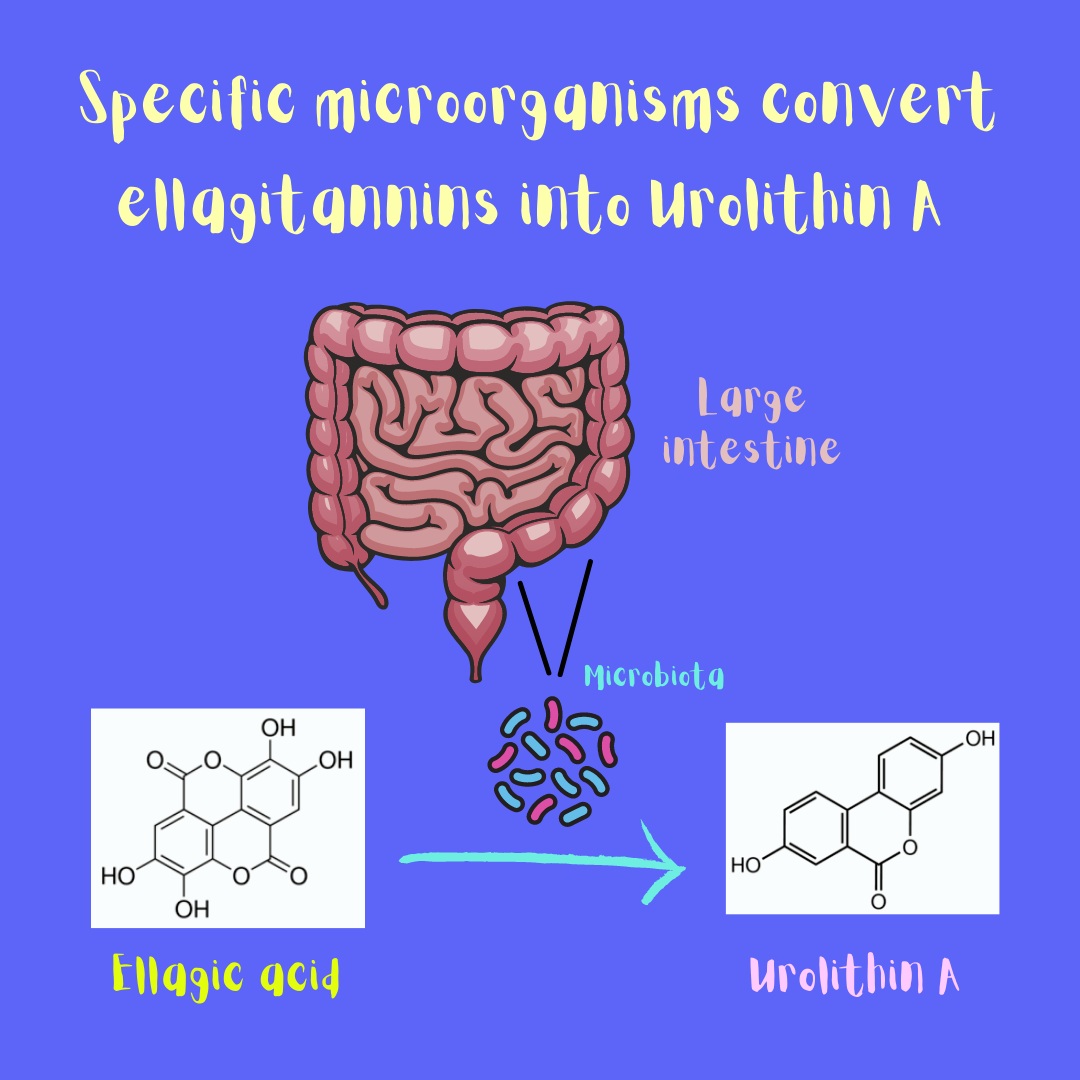
Urolithin A exits our gut through the bloodstream. And, from there, it gets to the different organs (including the skin), where it works its miracles.
How does urolithin A yield its muscular benefits?
Once urolithin A makes it to the peripheral organs (for instance, the skeletal muscle), it gets into the cells and stimulates the elimination of old mitochondria (the organelles that produce energy within our cells in the form of ATP).
That also allows the biogenesis of new mitochondria within the cells.
As a result, old or damaged cells increase their energy levels and get back in shape (rejuvenate).
That’s especially relevant for organs that have high energy requirements. For instance, the skeletal muscle, that needs plenty of energy to move. Or the skin, which has to renew and defend itself constantly.
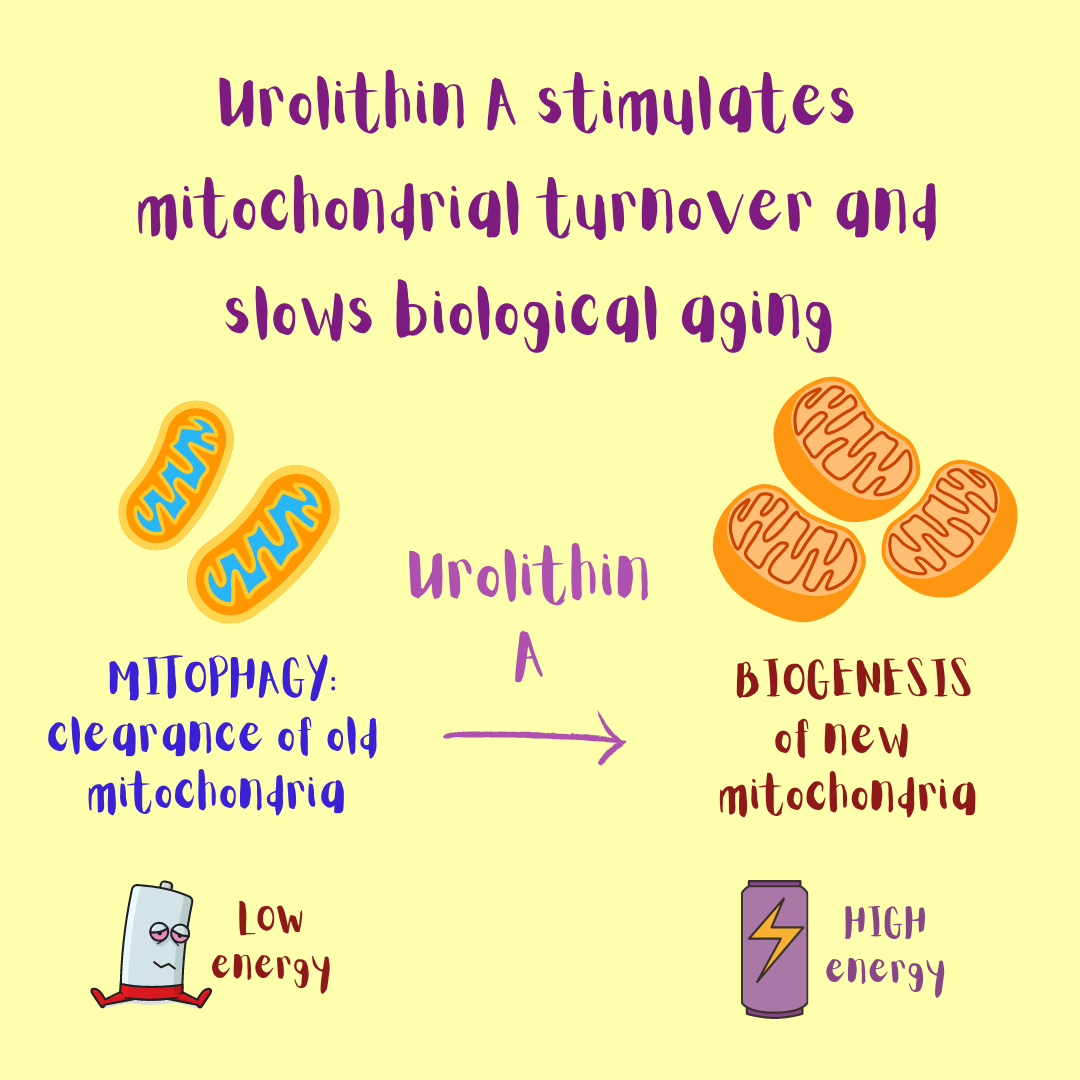
The rejuvenating outcome of urolithin A on skeletal muscle fibers (which we need to move our bodies) resembles the impact that regular physical exercise has on them.
A well-done clinical study (randomized, double-blind, placebo-controlled) including sedentary, older, healthy people (61 to 85 years-old) confirmed the effects seen at the cellular level.
Those who took oral urolithin A daily (1000 mg a day for 28 days) showed no adverse effects, increased biomarkers of mitochondrial health, and more healthy mitochondria in skeletal tissue biopsies.
They also presented better systemic mitochondrial efficacy.
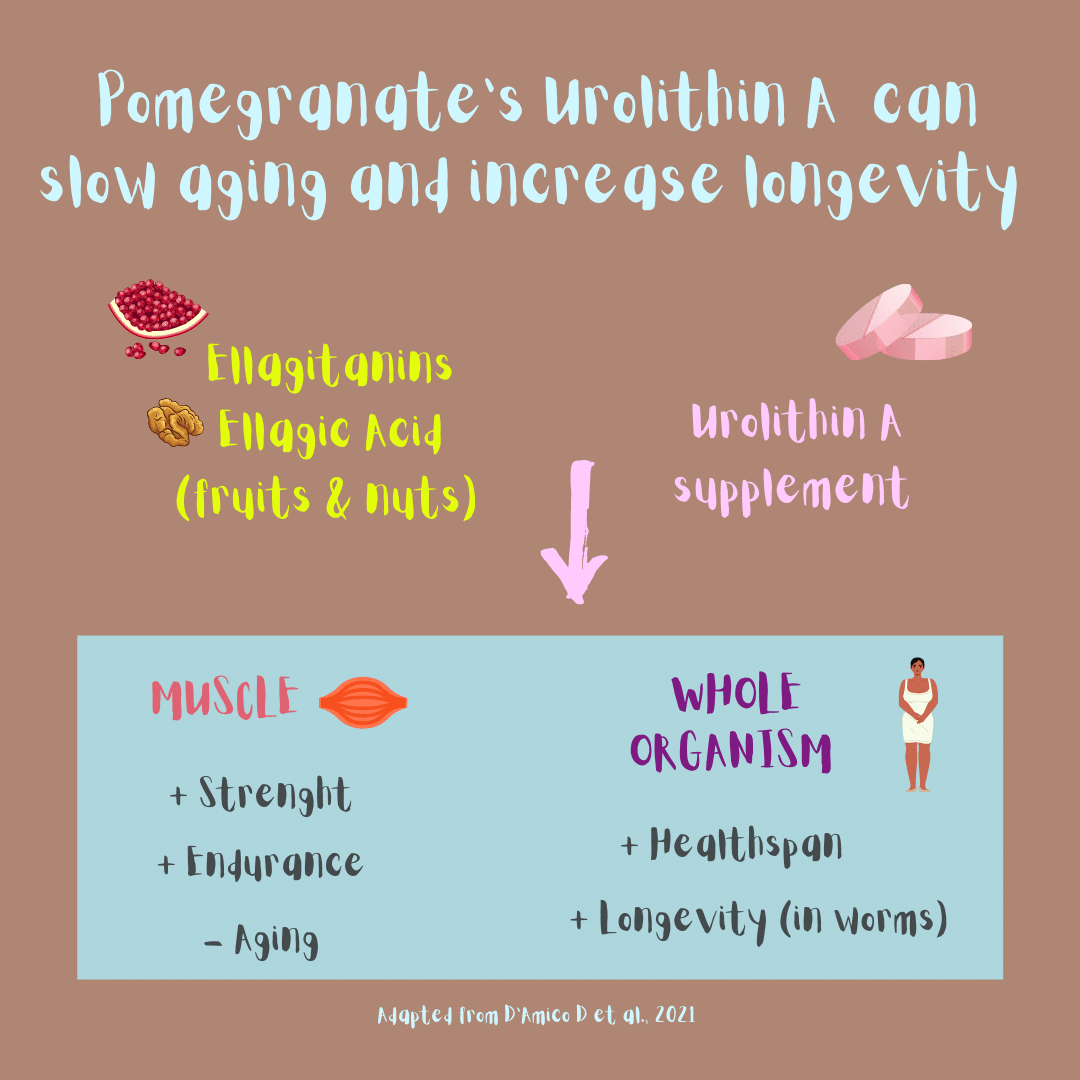
Therefore, the positive impact of daily urolithin A on mitochondria goes beyond the skeletal muscle and affects the organism as a whole.
An overall boost of mitochondrial function increases our general energy levels that, if sustained, translate into a younger biological age.
Indeed, enhanced energy levels (and higher levels of the molecules that allow that, such as ATP and NAD+) are scientifically one of the hallmarks of slow aging.
For the moment, there are no known edible natural sources of urolithin A.
However, given its proven health benefits, the FDA (the Food and Drug Administration, which regulates supplements and medicines in the US) approved urolithin A as a nutritional supplement (in quantities from 250 mg to 1000 mg a day).
So, if you don’t ingest pomegranate every day, there’s the choice of taking an urolithin A supplement.
Does everybody produce urolithin A after the ingestion of ellagitannins?
The answer is no. The composition of the gut microbiota is individual and pretty much the same throughout our lifetime.
Some people seem to lack the bacteria that turn ellagitannins into urolithin A. Therefore they don’t release urolithin A to the blood stream after eating, for example, pomegranate.
Since you don’t know whether you can produce urolithin A in the first instance, the urolithin A supplements may come in handy.
What can pomegranate juice do for your skin?
Direct topical application of pomegranate extract can reduce the skin damage induced by the UVB radiation from the sun.
That’s possibly due to the free radical-scavenging and other actions of ellagitannins (whose in vitro antioxidant and anti-inflammatory properties are well-known).
As happens in the gut, some microorganisms of the skin microbiota might convert ellagitannins (such as ellagic acid) into urolithin A after applying them to the skin (we don’t know this yet).
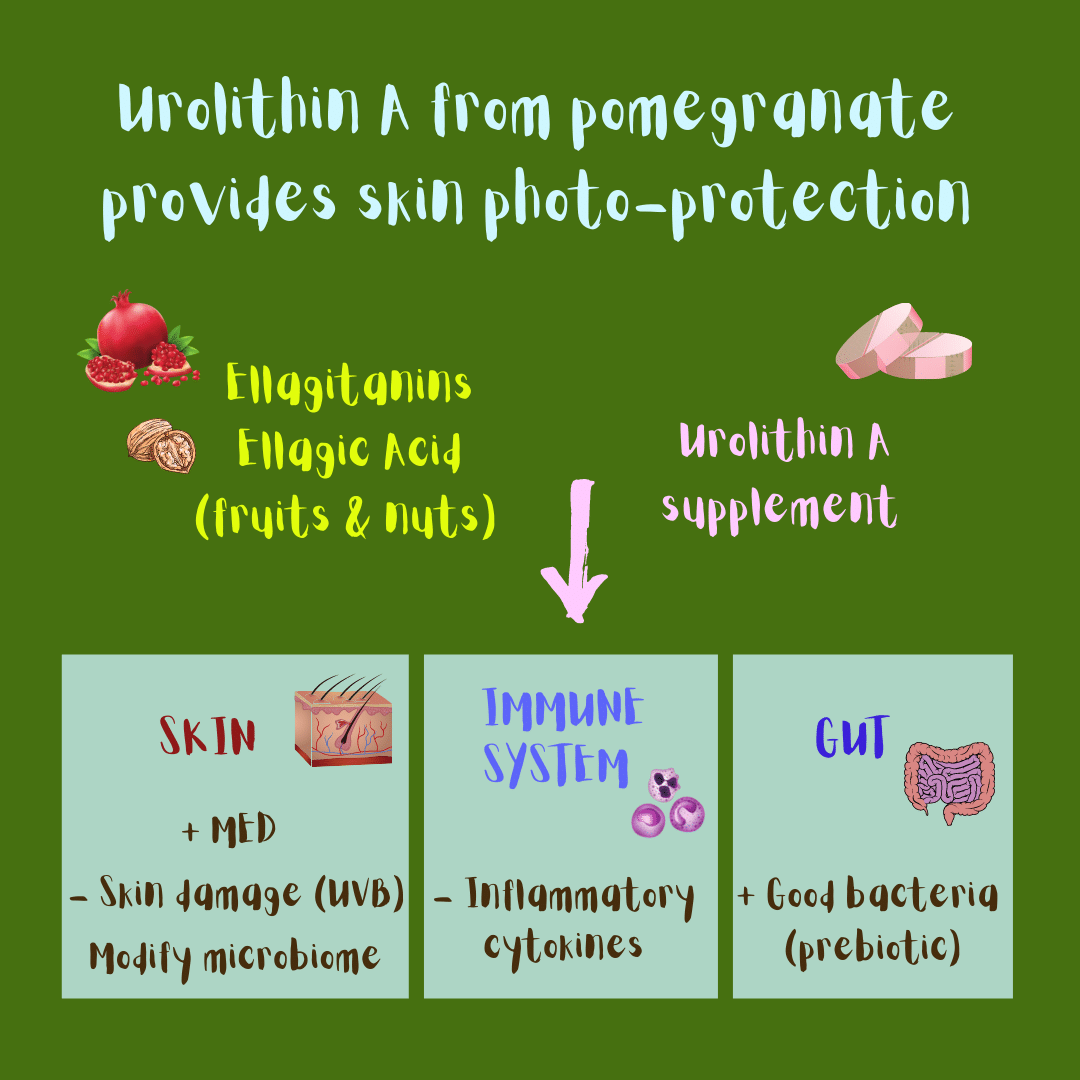
However, we know that after oral ingestion of pomegranate extract or juice, urolithin A is involved in the protection against UVB light.
The Minimal Erythema Dose (MED) is the lowest UVB dose required to induce skin erythema (the redness that we see when our skin is about to burn).
Thus, oral or topical compounds with photo-protective properties against UVB light increase the MED.
So, if you ingest (or apply) those compounds, your skin can resist a more intense sunlight exposure before getting burned.
There is a 2019 study where 74 women (with phototypes II-IV, or medium skin tones) took either pomegranate extract (1000 mg/day), pomegranate juice (237 ml/day), or a placebo (nothing) for 12 weeks.
After those three months, the ingestion of pomegranate extract and pomegranate juice significantly increased the MED (compared to placebo).
In the pomegranate extract group, those women who hadn’t the ability to produce urolithin A presented a lower MED (lower photo-protection) at the end of the study than those who had.
That shows that urolithin A is involved in the photo-protective effect.
It also appears that the juice may offer higher photo-protection than the extract since the people who didn’t produce urolithin A in the juice group showed a similarly increased MED as the urolithin A producers.
Then, how does urolithin A work within the skin?
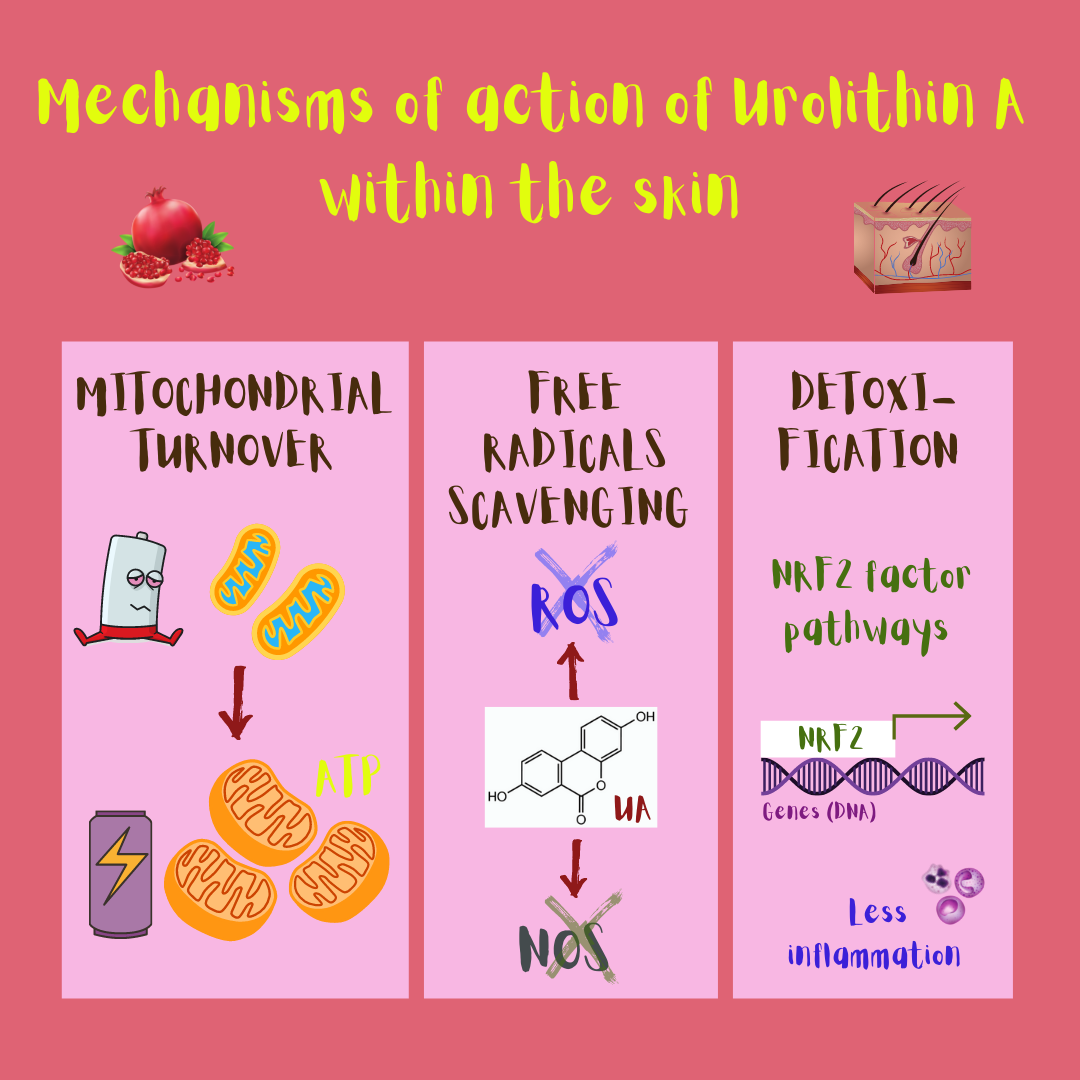
As seen in other organs, urolithin A could increase the removal of damaged mitochondria and the biogenesis of new mitochondria.
The replacement of old mitochondria with fresh mitochondria entails an improvement not only in cellular energy.
It also heightens the ability of the cells to counteract the oxidative damage otherwise caused by UVB light.
That’s because some of the intrinsic cellular antioxidant systems are in the mitochondria. Thus, the more fully functional mitochondria, the merrier.
Additionally, the urolithin A molecules might be acting directly as free radical scavengers themselves.
Or by activating other molecules (such as the Nrf2 factor) that stimulate the expression of proteins involved in additional detoxification mechanisms (see the image below).
Those actions would help lessen the damage to the DNA upon sunlight exposure and, hence, delay the skin redness.
Urolithin A could also help counteract the effects of air pollutants on the skin through similar mechanisms.
Does urolithin A provide photoprotection when applied to the skin?
Nobody has evaluated yet whether urolithin A could be a cutaneous photo-protectant or skin youth-booster after topical application.
However, we know that ellagic acid, which has a higher molecular weight than urolithin A (302.197 Daltons), penetrates the skin and provides anti-inflammatory and depigmenting effects.
So urolithin A, due to its smaller size (228.203 Da) and similar chemical nature, most likely will penetrate the skin.
Then why not? It seems that urolithin A could work topically.
Regarding that, I’ve found a patent that claims the topical use of urolithin A (0.2% to 1%) for the localized treatment of inflammatory skin conditions (it seems to diminish the number of immune cells that infiltrate the skin and foster cutaneous inflammation).
Who knows? Maybe soon we’ll be able to trust the application of urolithin A to foster our UV defense, decrease inflammation, and boost the youth of the skin (and a lower cutaneous biological age).
For now, we already know that our daily dose of pomegranate (or our urolithin A supplement) work!
I hope you liked this article.
Take good care of yourself, and see you soon!
María
REFERENCES – REJUVENATE SKIN POMEGRANATE RASPBERRIES
Impact of the natural compound Urolithin A on Health, Disease, and Aging. D’Amico A et al., Trends Mol Med, 2021; 27 (7): 687-699.
Pomegranate juice and extract consumption increases the resistance to UVB-induced erythema and changes the skin microbiome in healthy women: a randomized controlled trial. Henning SM et al., Sci Rep, 2019; 9 (1): 14528.
One Comment