A natural-looking self-tan without damaging your skin: 6 steps that work
What self-tanner should you use? Don’t they generate free radicals and may damage your skin? Here I clarify the myth and the truth about sunless tanners. And show you 6 key steps you shouldn’t miss to achieve a safe, natural-looking sunless tan.
Español
Hi! We’re approaching the fall, but there’s still good weather. And who feels like not wearing light clothes?
Thus, why not apply one of those sunless tanners? Especially if you have some memorable day or event coming up.
But which one? Don’t they generate free radicals and may damage your skin? That’s what people are saying!
In recent times, even experts or influencers have fostered inaccurate ideas about how self-tanners work and their supposed dangers.
My years in a research lab and a good knowledge of skin biology now come in handy!
Those were people with good intentions who, seeing a couple of isolated scientific studies, decided to go with the flow (and against sunless tanners). And that can be misleading for others.
Let’s shed some light now! With the following:
1· What DHA (Di-Hydroxy-Acetone, the natural molecule in sunless tanners that induces skin browning) actually does when you apply it to your skin.
2· Are all skincare products with DHA innocuous? And how they compare to solar tanning or indoor UVA tanning booths.
3· The scientific basis and best-kept secrets to achieve a natural- looking, even sunless tan. Hint: less is more!
And I’ll show you my favorite sunless tanning product at the end. Don’t miss that!
The myth about DHA
DHA is a sugar (see below).
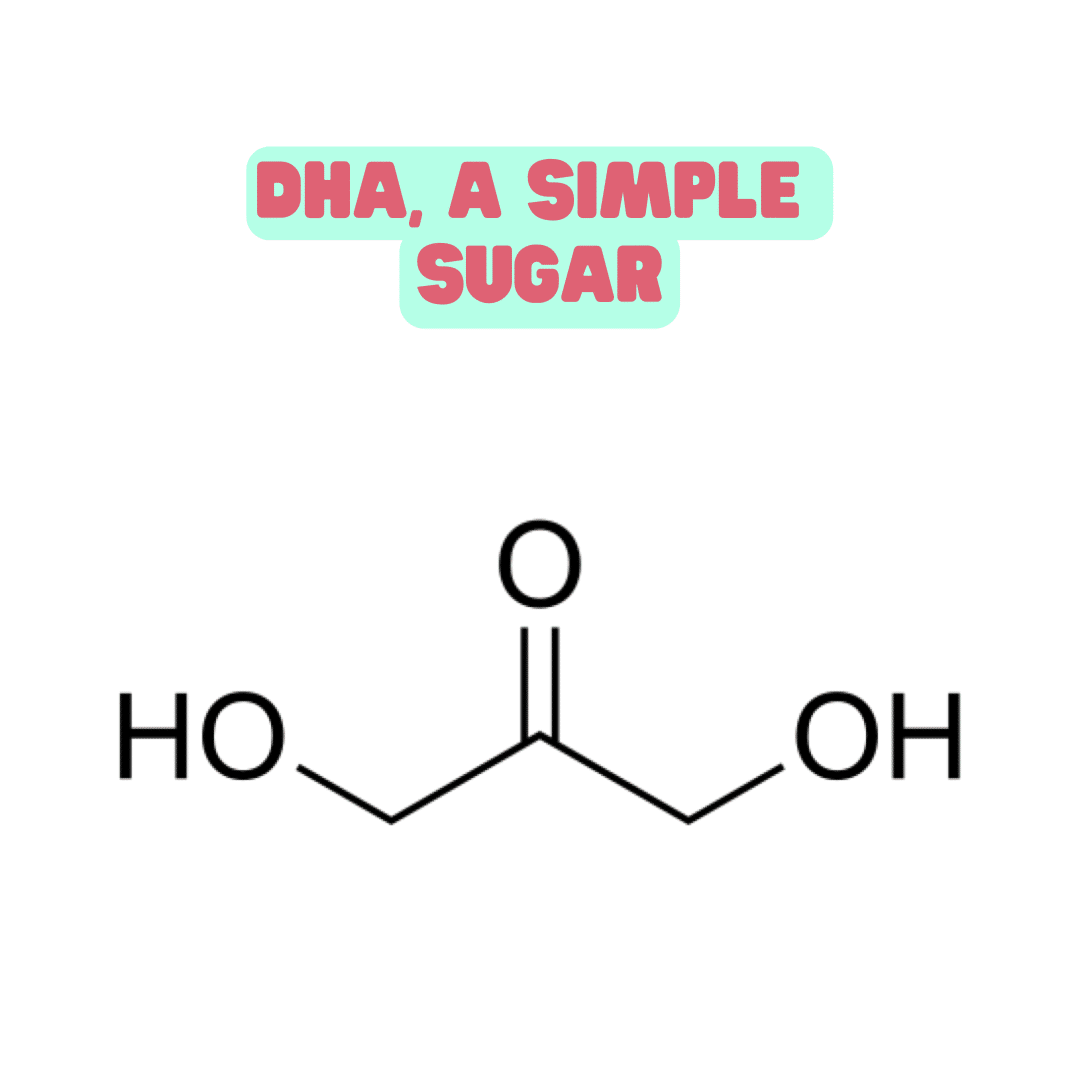
We typically use the fermentation of glycerin (a natural alcohol found in many hydrating skincare products) to obtain DHA for sunless tanners.
DHA is a natural molecule. It’s part of biochemical routes within our body (like glycolysis, the route we use to break down glucose and obtain cellular energy).
DHA remains in the stratum corneum (the outermost layer of the skin – see below) when applied to your skin.
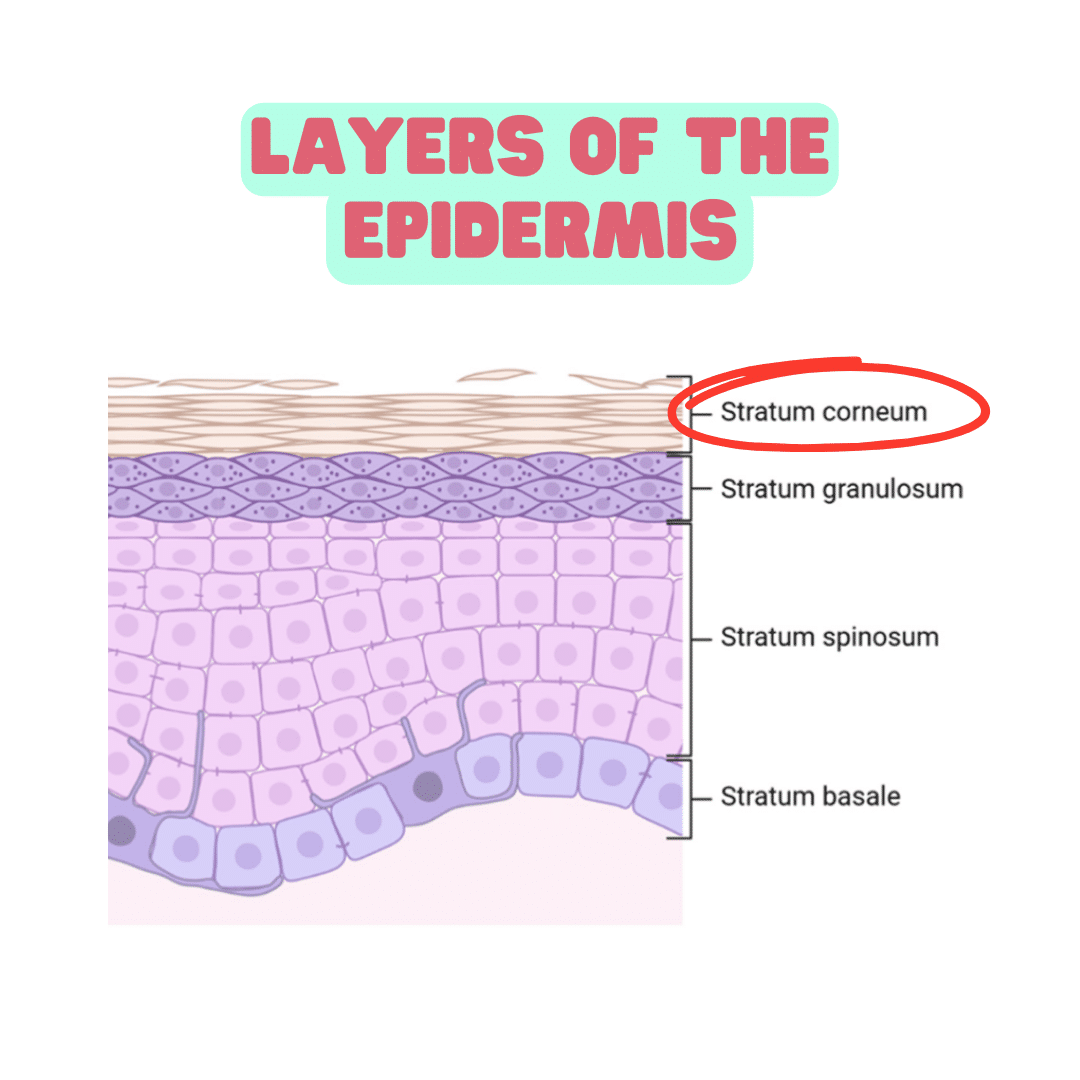
There, it reacts with amino acids and gives rise to melanoidins, which are molecules similar to melanin (the natural pigment of our skin) that endow a brownish color to the skin surface (see the image below).
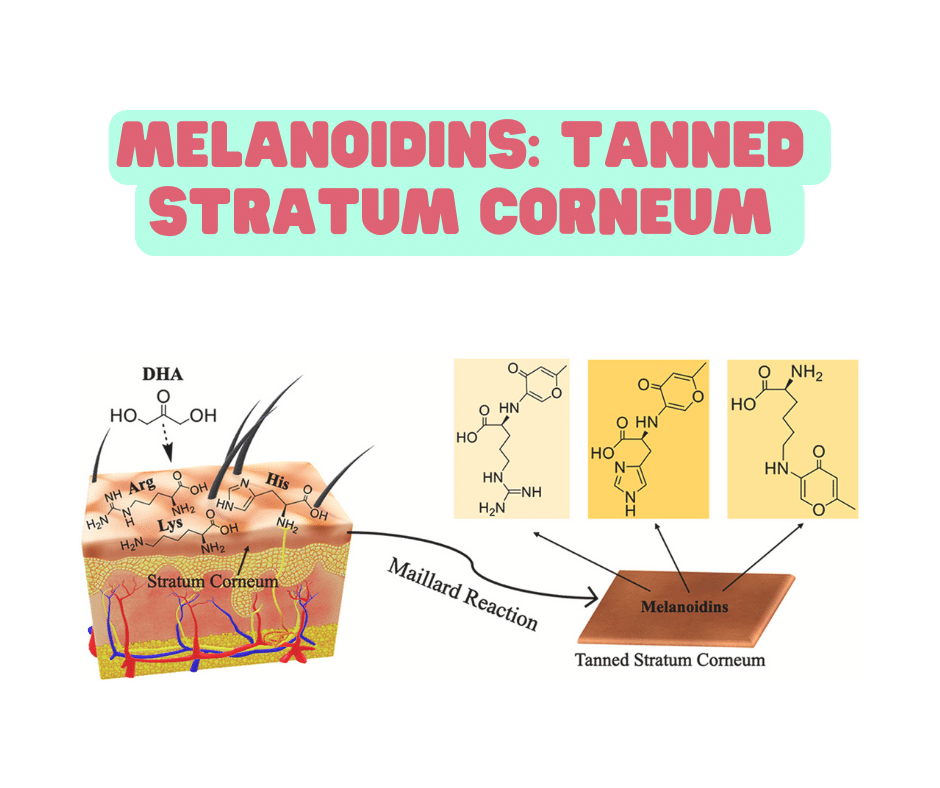
Most studies about the reaction that takes place between DHA and amino acids come from the food industry (not from studies in human skin), where the conditions of that reaction (pH, temperature, etc.) haven’t much to do with those in your skin surface.
That’s called the Maillard reaction, and is a complex process with various phases.
The first phase involves an oxidation reaction that generates free radicals. People have assumed that also happens in the skin.
And here comes the first part of the myth!
Some isolated studies in cells or mouse skin showed free radicals formation in a Petri dish or at the skin surface.
While mouse skin is similar to human skin, they aren’t the same. And the DHA product applied to mice wasn’t a skincare product at all – the concentrations of DHA and conditions of the experiments weren’t comparable to your DHA/self-tanner applications –.
We also know that the first phase of the Mailllard reaction isn’t what gives rise to the melanoidins in the skin surface.
Moreover, evidence shows that the first phase of the Maillard reaction doesn’t even occur in our skin upon DHA application.
Thus, based on all that, it makes sense to dispose of the free radical damage theories.
The truth about DHA
Besides, DHA remains in the skin surface (at the stratum corneum, made mostly of dead cells).
So, even if there was a certain degree of free radical formation:
1) Many other non-harmful skincare products (including antioxidants) form free radicals when applied to the skin. The skin can counteract that (if it happens).
2) Free radicals formation would be restricted to the skin surface (since the percutaneous penetration of DHA in healthy skin is negligible).
However, if you get tanned by exposure to the sun, the skin damage isn’t confined to the skin surface.
On the contrary, it affects all skin layers, including the deep dermis. That truly ages your skin and puts you at risk for skin cancer in the long-run.
The same is true of indoor UVA tanning booths. Only one tanning session increases the risk of developing melanoma, squamous cell carcinoma, and basal cell carcinoma – the 3 most common skin cancers – .
Skin cancer is the most common cancer, with an incidence higher than 40%.
So, what’s best?
The supposed, unproven, and superficial threat of DHA or the extensively proven, deep, and skin-aging damage caused by solar or sunbed tanning?
Are all cosmetics with DHA innocuous?
In the European Union, DHA is considered safe in cosmetics in a concentration of up to 10%.
Most gradual-tanning skincare products contain 1-3% of DHA (instant tanning products usually include 3-5% DHA).
Don’t look for the percentage of DHA on the packaging, you won’t find it!
And globally, there’s no track record of skin damage or aging caused by repeated applications of any DHA-containing skincare product.
Worst case scenario, you might be allergic, intolerant, or sensitive to DHA. That may also happen with any substance or skincare ingredient you apply to your skin.
In that case, stop using self-tanners. You can enhance your skin tone with makeup.
And, over all, any natural skin tone is beautiful!
One thing is to enhance the skin with makeup or a subtle artificial tan. Another very different thing is when you try to change the color of your skin constantly – you don’t need that!
6 steps to achieve a natural-looking, even sunless tan
1 · Exfoliate beforehand
That’ll yield optimal results. You can use a scrub the day before DHA application.
Or mildly exfoliate your skin with every shower using a shower gel with hydroxy acids (that’s what I do – you can learn more about it here).
If you do the latter on a daily basis, you’ll always be ready for self-tanning.
2 · Apply self-tanner on hydrated, non-irritated skin
I always apply moisturizer first. You can let it absorb and then apply your self-tanner.
3 · Use a tanning glove
See mine below.
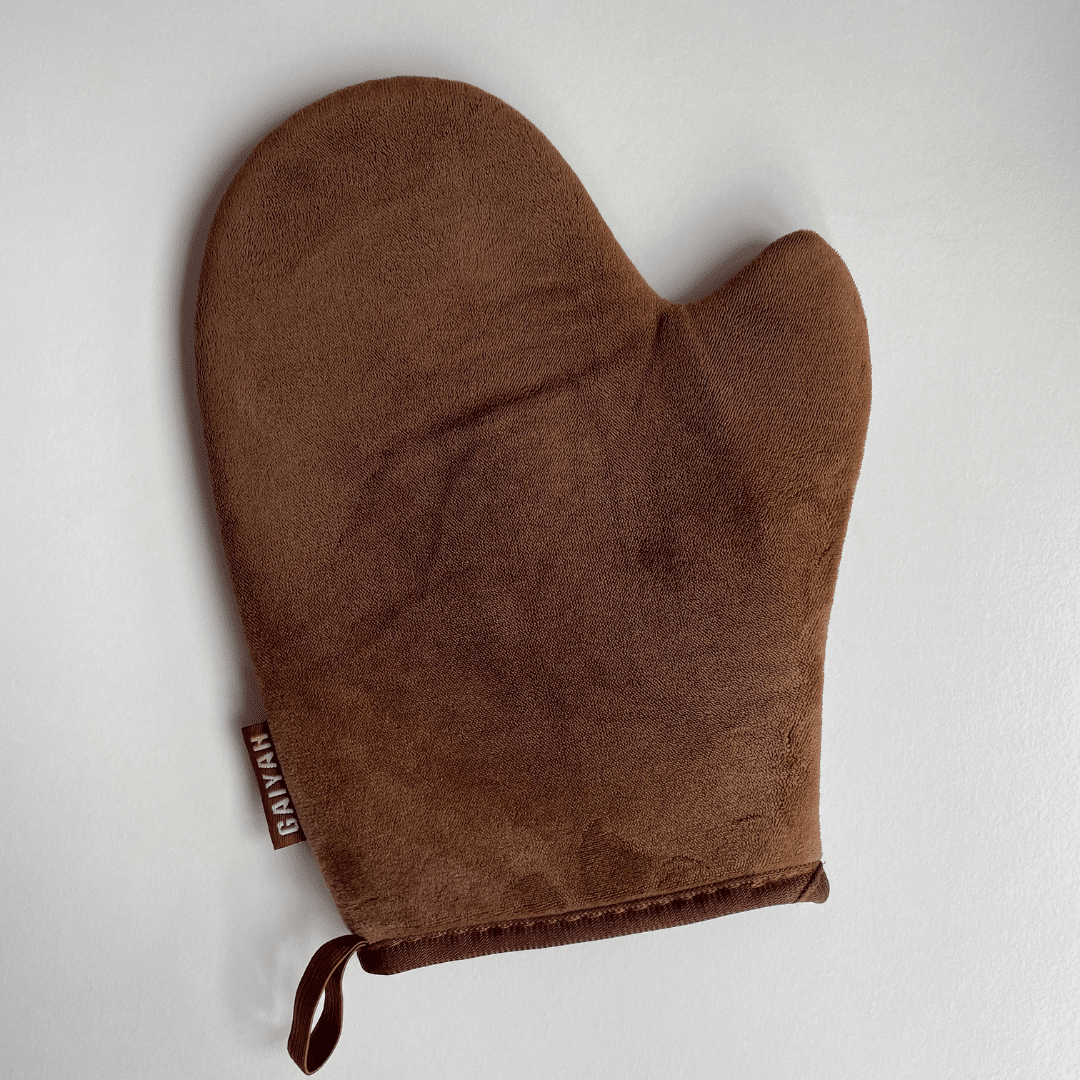
That avoids hand staining and helps spread the self-tanner evenly (I pass several times over the same area to avoid streaks).
4 · Be careful over joints, hands & feet, cavities, or folds
In some of those places the skin is thicker.
Therefore, they naturally have a thicker stratum corneum and absorb more DHA (they develop more color). Also, the brown color will last longer there.
Examples of risky places are the belly button or the elbow/knee areas.
Sometimes I’ve created my own mess over those areas. Not funny! That may last for weeks.
5 · Use gradual self-tanners, in low amounts
That guarantees a natural-looking tanning.
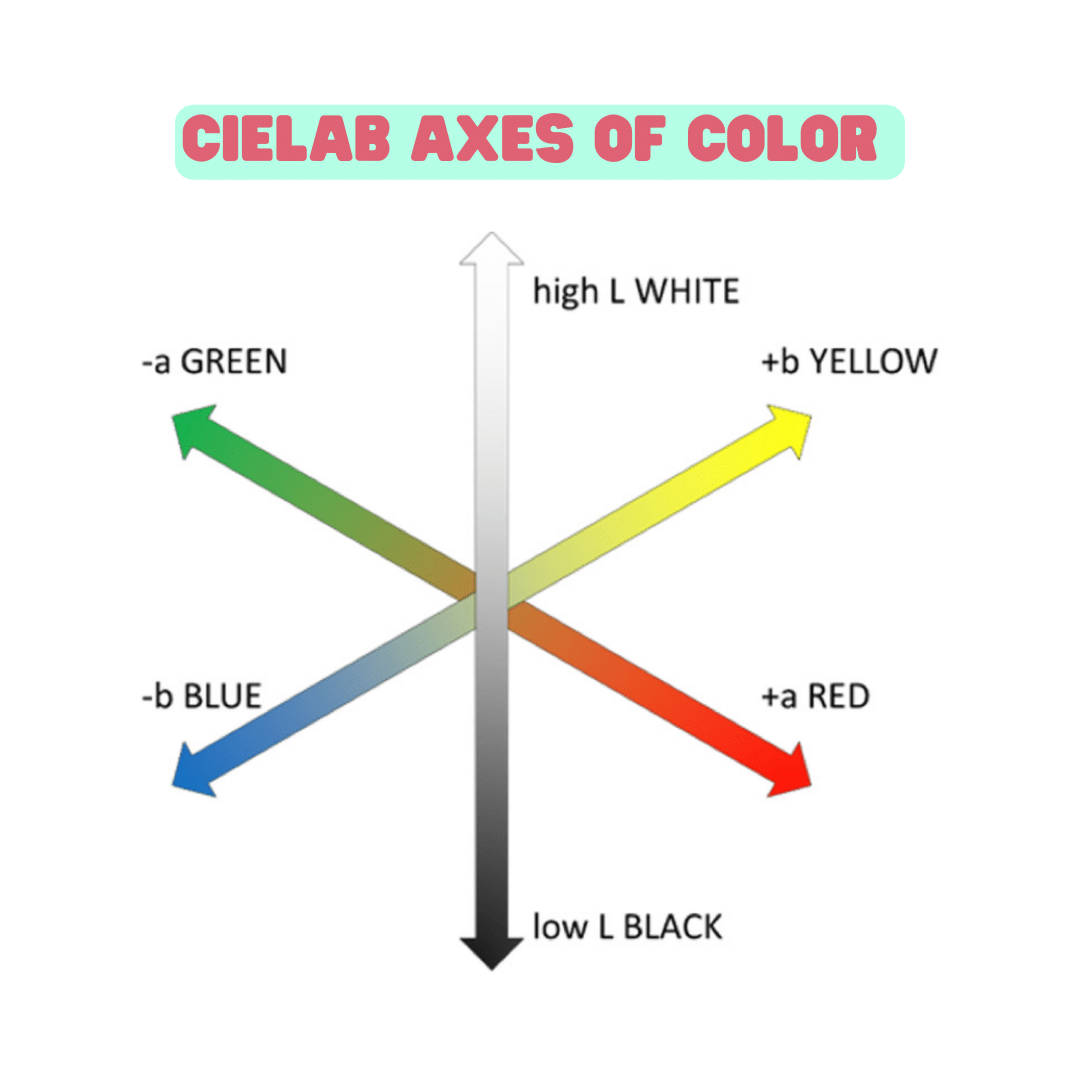
Some researchers used the CIELAB space (see the image below) as a reference to quantify and compare the color of naturally brown skin with that of DHA-tanned skin.
They found that the human eye perceives the DHA-induced tanning as natural only when you apply low amounts of DHA.
That’s what I do! And the product I discovered last year (I’ll show you that below) allows me to do that easily (although many times I feel lazy when it comes to self-tanning).
6 · Apply the self-tanner at night, before going to bed
And let the product dry before wearing any clothing on top of it.
That way the DHA-induced tan develops while you are in bed.
And any reaction in the skin surface takes place during that time.
Therefore, you minimize any interaction with sunlight or any other products or surfaces.
My favorite self-tanner
Usually, I only use self-tanner on my body. My face (and the central areas of my body) are naturally darker than my arms or legs, for example.
For the face you’ll need a facial self-tanner. Facial skin is thinner and therefore the percentage of DHA needed is lower.
After years of trying other gradual self-tanners, I discovered these drops (they have a light serum texture).
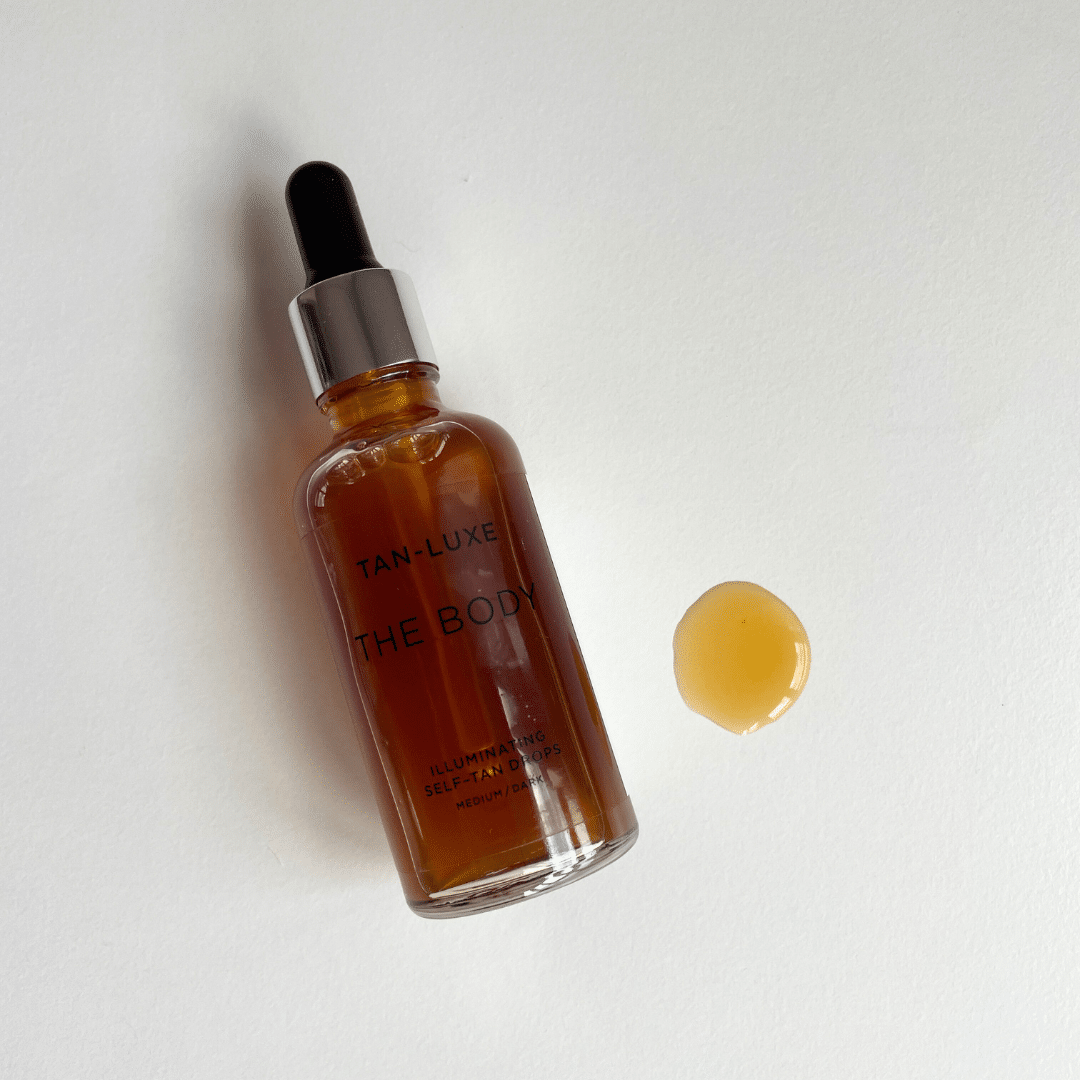
I love them because you have to mix them with your moisturizer. Blend them well!
Don’t let the drops sit on your skin by themselves or you’ll get a dark brown patch.
They are very easy to apply and great to achieve a delicate tan. If you want, you can intensify it by applying the product several days in a row.
I strive for a subtle tan that lasts about a week (a few days) on those areas most commonly touched by the sun in the summer.
Since the epidermis continuously regenerates, and therefore you loose the dead skin cells at the skin surface constantly, after a few days you’ll have to reapply to maintain the tan. That is what happens with any self-tanner.
I think that’s a better approach than applying an instant self-tanner (which has more DHA) or a higher amount of a gradual self-tanner.
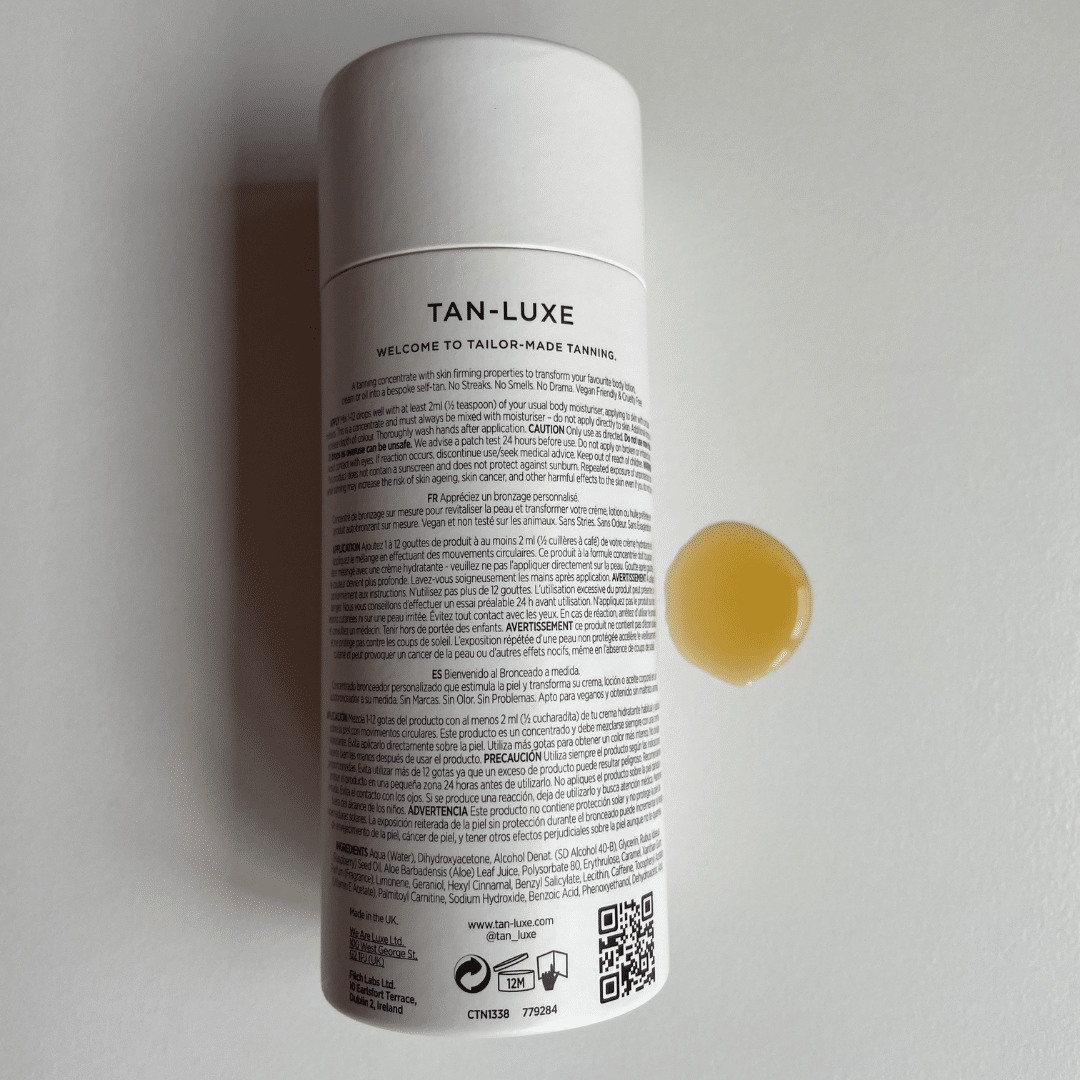
Just follow the instructions at the product packaging. These drops last a long time.
They don’t contain a ton of perfume (I prefer that). You’ll still notice a mild smell to self-tanner at night while the browning develops.
I hope you enjoyed this blog!
Don’t forget to subscribe to my bimonthly newsletter if you haven’t done it yet.
Have a good time and see you next time!
María
For your reference:
In search of the perfect tan: Chemical activity, biological effects, business considerations, and consumer implications of dihydroxyacetone sunless tanning products. Turner J et al., J Cosmet Dermatol., 2023 Jan; 22(1):79-88.
In vivo formation of Maillard reaction free radicals in mouse skin. Lloyd R V et al., J Invest Dermatol., 2001 Sep; 117(3):740-2.
Español
One Comment