Retinal benefits for summer: how to use it without irritation
Worried about that light skin peeling you notice upon retinol, retinal, or retinoic acid and whether you should use retinoids this summer? Are retinoids the right fit for your skin right now? Let’s resolve your doubts point by point – in the blink of an eye.
Español
Hi, the summer is here!! It’s time to call up the best sun protection (stay tuned for that!) and our dear friends, the retinoids.
Retinoids, like retinal or retinoic acid, are natural or synthetic analogs of vitamin A (aka retinol).
When applied to the skin regularly, they prevent and reverse cutaneous sun damage (also called photodamage), at least to a certain degree. That’s a scientific, well-known fact.
Thus, unless you have a specific health or skin condition/sensitivity that prevents you from applying retinoids regularly, they’re excellent skin allies in the summer (and winter!). But don’t use them if you’re pregnant or breastfeeding.
All-trans retinoic acid (or tretinoin) is the biologically active form of retinoids, like retinol, retinal, or retinoic acid (to learn the differences check my previous blog on retinoids).
Retinoic acid binds specific receptors in the nucleus of skin cells and triggers gene expression changes. It acts at our core, at the DNA level (and that’s why it’s so powerful).
So let’s dive in!
1- Let’s start with a recap of the neat benefits of retinoids over the skin, especially in the summer.
2- I’ll tell you which have been my favorite products for many months – those I worship! And how to optimally use them now. You’ll love them too!
Recap of the refreshing effects of retinoids on the skin
These are the 3 main reasons why retinoids prevent and revert photodamage and thus are cool in the summer:
1 · They speed epidermal cell turnover.
The cells of the surface shed off the skin more often. Thus, cells with potentially dangerous mutations (or pre-cancerous cells) get out of your skin faster – which helps keep skin cancer away.
Besides, that aids in reducing uneven skin tone (such as dark spots). And diminishes the chances of developing skin hyperpigmentation. Hence it helps keep melasma under control.
Moreover, the enhanced epidermal cell turnover results (with time and consistent use) in a thicker, healthier epidermis.
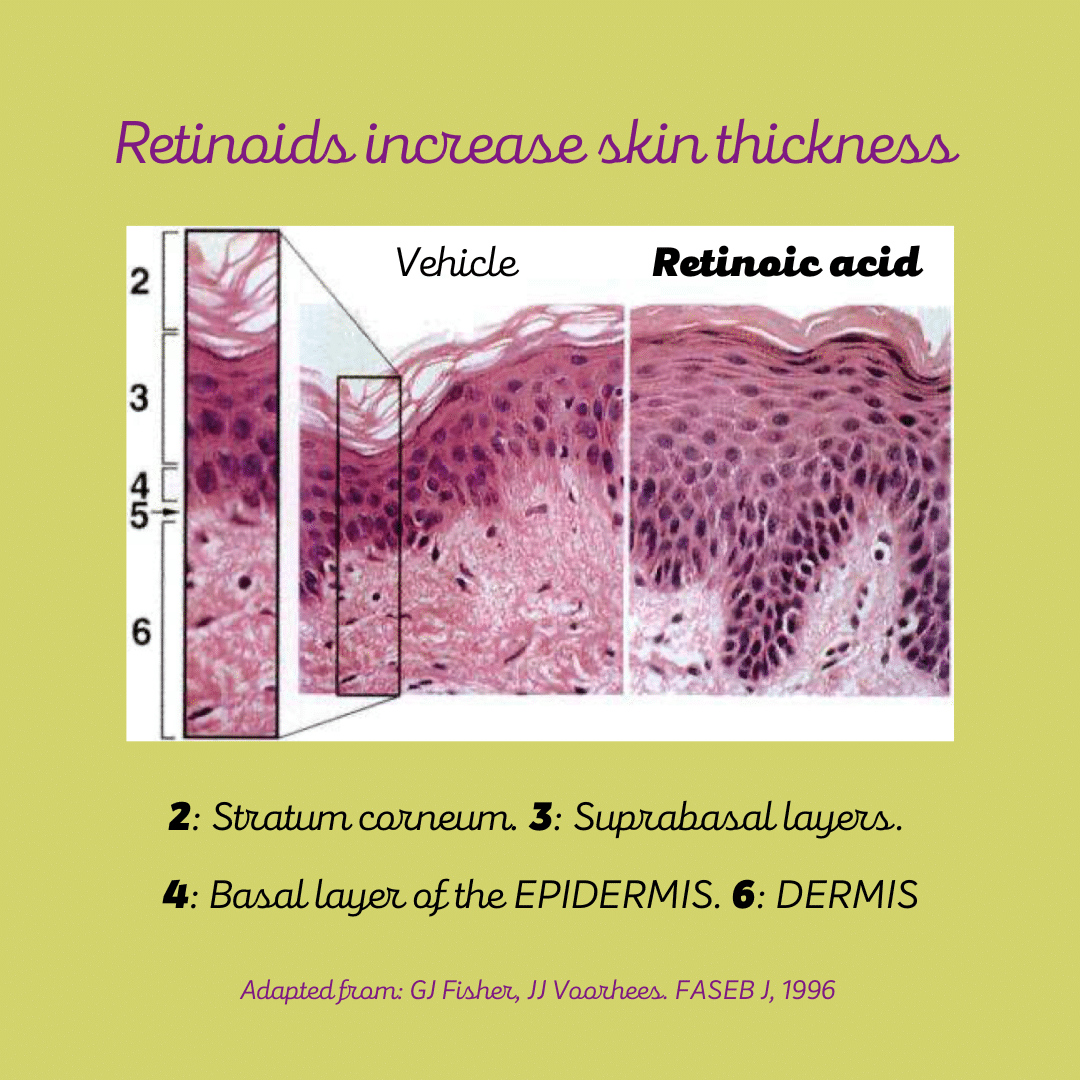
2 · They boost the cutaneous immune system.
Immune system cells eliminate abnormal skin cells (such as those with pre-cancerous mutations).
Excessive sun exposure – which is quite common in the summer, right? – depresses the cutaneous immune system. And retinoids help restore it.
Yet be mindful of how much time you spend under the sun, even if you wear sunscreen. Retinoids help if you collaborate – they don’t make miracles.
3 · They preserve and increase collagen and elastin in the dermis.
Therefore, with time and the consistent use of retinoids (no need to apply them every day), you can achieve a thicker, healthier dermis. Which means bouncy, wrinkle-free skin.
But don’t forget: sun protection measures are paramount regardless of retinoid use!
Why it’s cool to use retinoids in moderation in the summer
You just heard the most compelling perks of regular retinoid use – I don’t need to tell you much more.
Many people with sensitive skin (with rosacea, for example) love and benefit from them. Don’t be afraid to try (here’s how to introduce them into your skincare routine) and see how it goes! You can give retinoids up anytime if your skin does not tolerate them well.
I’ll only add that the retinoids don’t reduce the amount of ultraviolet radiation needed to make your skin red (called Minimal Erythema Dose or MED). Thus, they don’t make your skin more sensitive to sunlight.
Unless your skin gets irritation upon retinol use, go ahead! Even if you see light, extra skin peeling the day after you apply your retinoid (that’s normal).
However, higher doses of prescription retinoids (oral or topical) are a game changer. In that case, follow the directions of your physician.
How to use gentle yet effective retinal products
A dermatologist got me into the habit of using topical retinoids (a couple of years ago). For me, she prescribed retinoic acid (tretinoin) once or twice a week to optimize my skin after a period of “rosacea troubles” (now my skin is much better).
At that time, I noticed the extra skin peeling every time I applied retinoic acid but didn’t experience any skin irritation.
After that period, I started using retinal (see my products below): it never irritates my skin, but I always notice the accelerated skin desquamation the day after.
So I bear that in mind and skip retinal the night before relevant events that might require (extra) makeup.
I use retinal sparingly (I think that’s better/optimal, you can see the scientific reasoning behind that here). Regarding frequency: I use it two or three nights per week.
And in terms of quantity: I use a small amount and spread it thoroughly (read below for more on that!).
Revive Eye Serum Ginseng + Retinal (Beauty of Joseon)
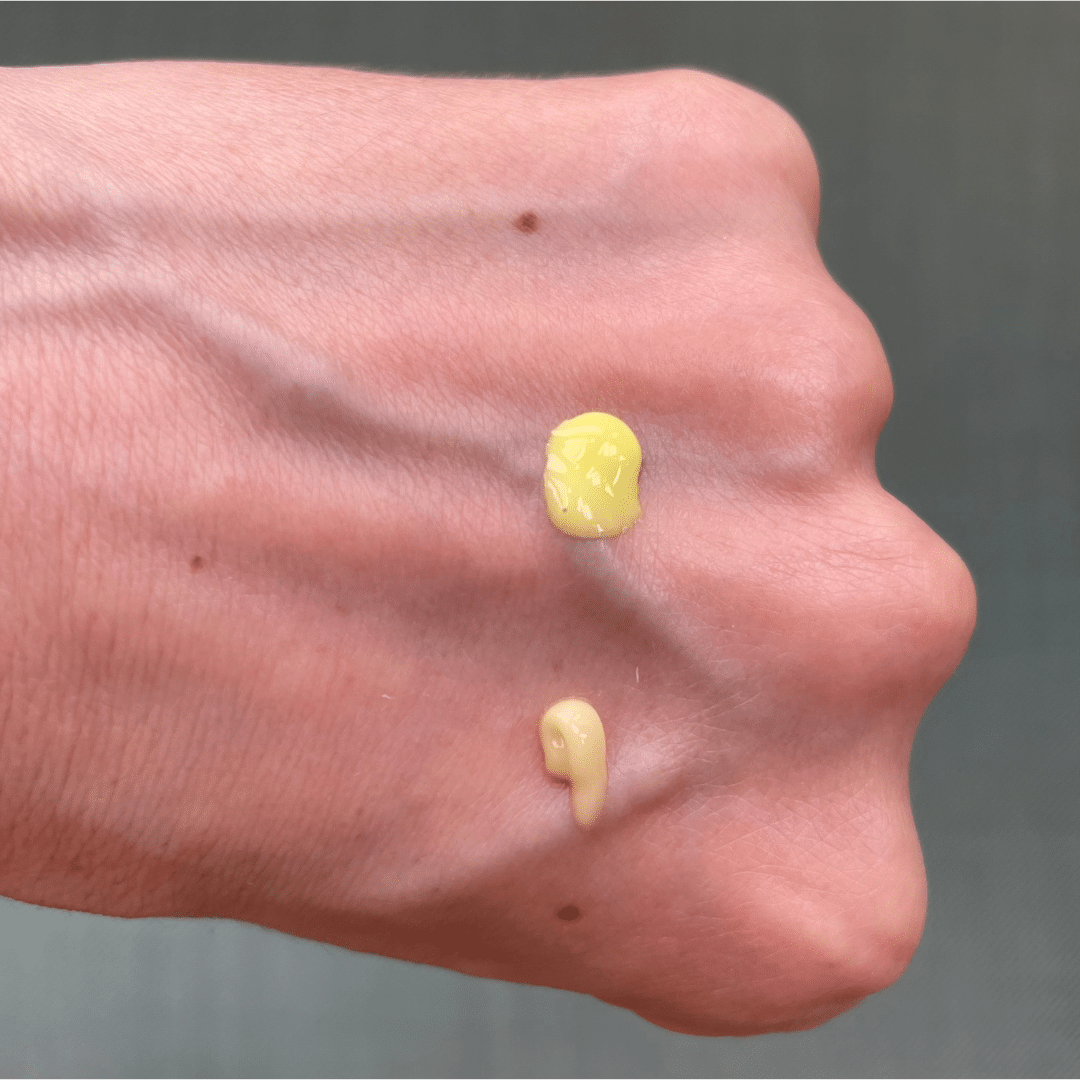
A yellowish, non-greasy cream that absorbs fast (see its texture in one of the images below). I apply a tiny amount on the eye contour (underneath and in the corner of the eye).
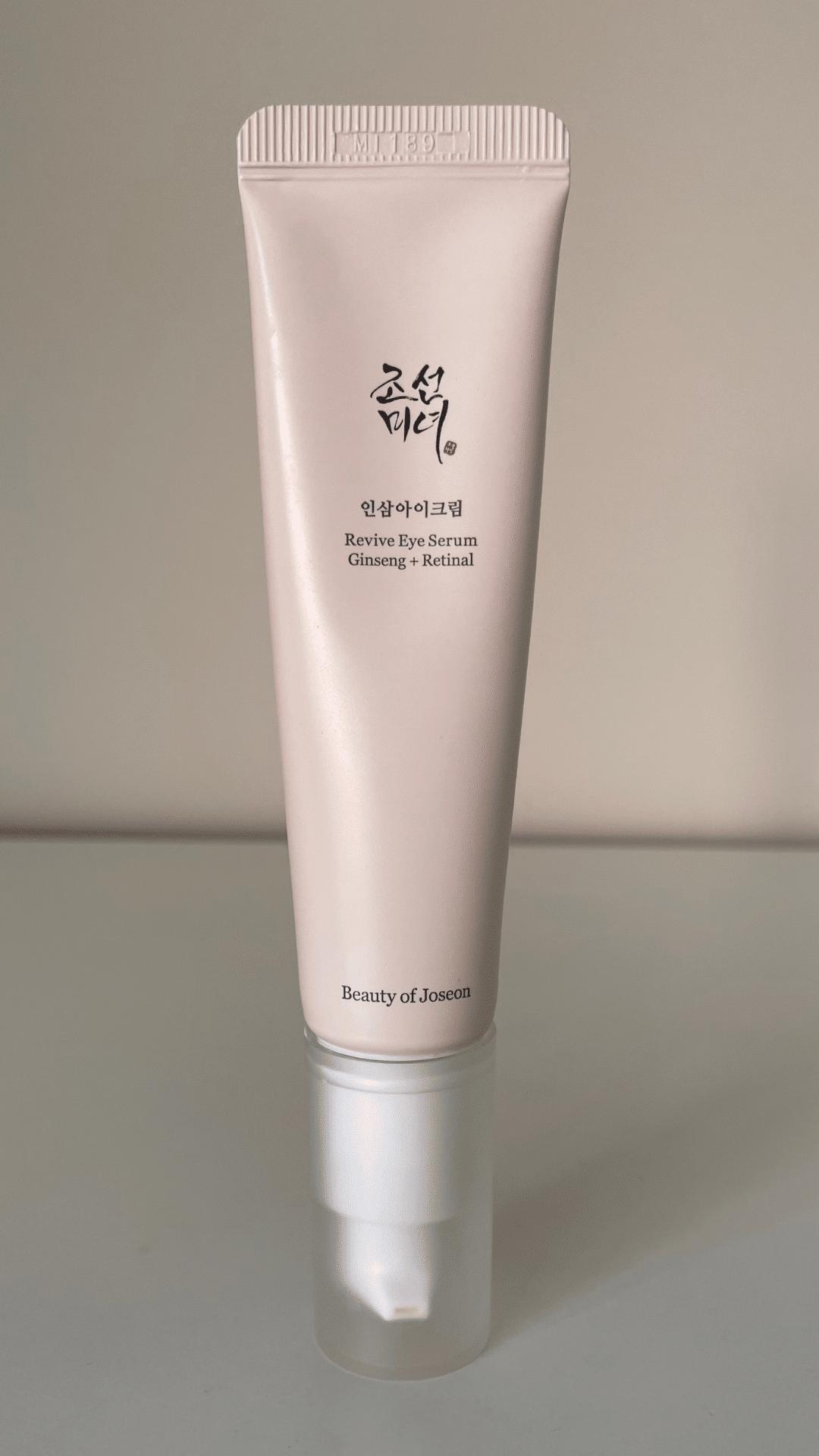
Then I let it absorb for 1-2 minutes and apply a light eye cream or moisturizer. You can skip the last step if you want (I usually do it to avoid potential skin dryness or over-the-top skin desquamation).
Sometimes I use the Revive Eye Serum with Ginseng and Retinal over a scar on my forehead and around the lips. It works just fine there too!
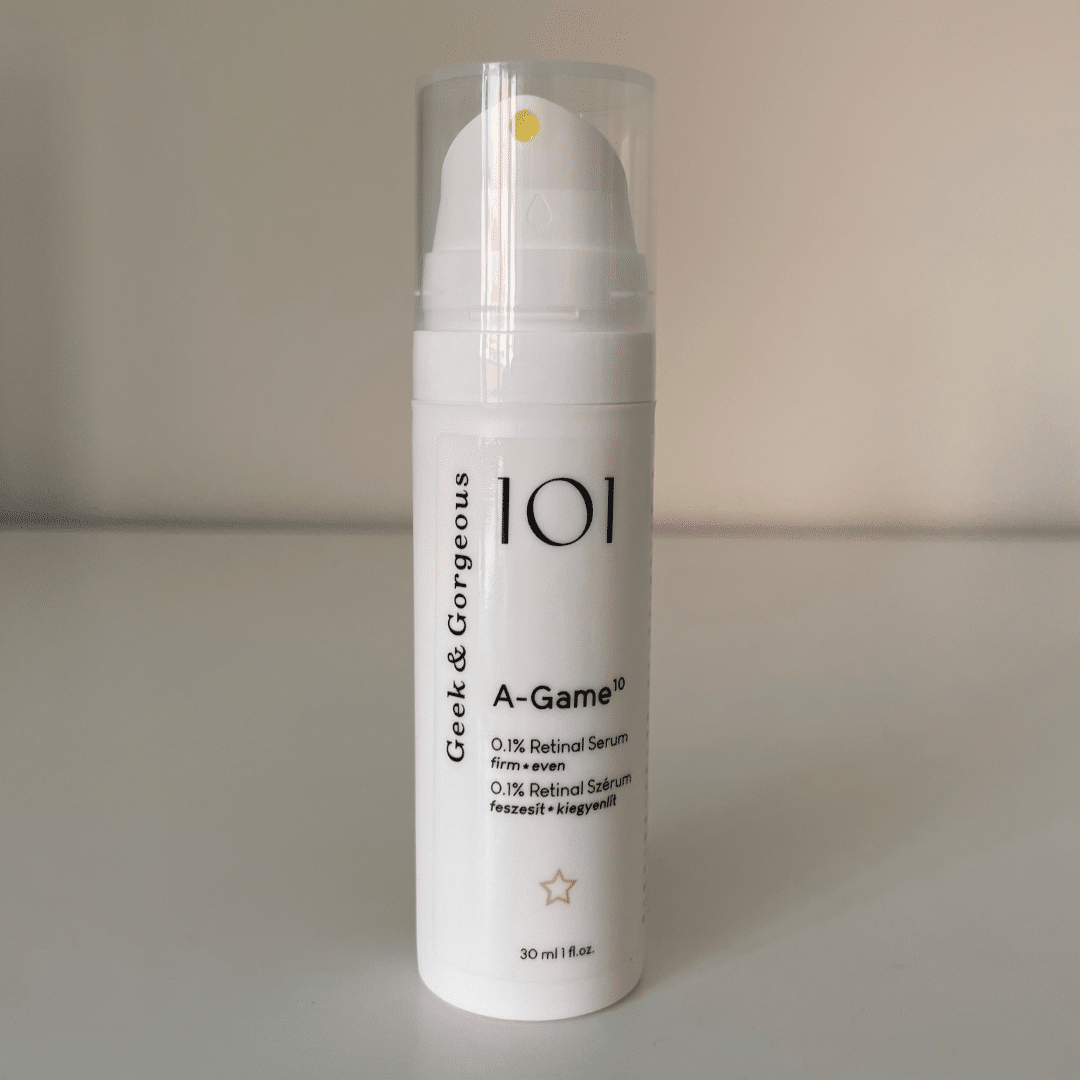
A-Game 10 (Geek & Gorgeous)
A bright yellow emulsion (the color will disappear when you spread it).
I put a small dot on each cheek, the scar on my forehead, around my lips (not over them – be careful, the skin on the lips is thin), and on a mole below my face (right at the top of the neck).
Then spread all that as much as I can.
For example, from my scar, I spread upwards. Also, I rub the couple of dots I put on top of my lips outwards and downwards (and reach below the lips). From the top of the neck, I rub it downwards too.
Finally, I apply a fluid moisturizer and spread everything over my face, neck, and chest even better.
Sometimes I use A-Game 10, for instance, on the arm, over the delicate skin covering the joint between the forearm and the rest of the arm. Then apply a moisturizer.
I hope this is handy. Please share your thoughts in the comments section below. I’ll reply ASAP!
Take care and see you soon!
María
Español
One Comment