Why you should use retinol, retinal or retinoic acid in the summer
Do you have doubts about the potential advantages & disadvantages of using topical products with retinol or other retinoids in the summer? Get clarity on that: learn how retinoids work in your skin, why they can be incredibly beneficial (especially when the sun is brighter), and in what cases you might need to think twice before introducing them in your routine.
Español
Last updated: June 16, 2023
Hi! Let’s unpack how retinoids can help your skin, whether in summer (when the sunlight is more intense) or wintertime.
What are retinoids?
Retinoids are biological compounds that include vitamin A1 (retinol) and its natural and synthetic derivatives. They are essential to maintain epithelial homeostasis, that is, to keep your epithelial tissues (including the skin or intestinal lining) working as they should.
They also orchestrate embryonic development: that’s why they mustn’t be taken or applied on your skin if you are pregnant or breastfeeding – the last thing you want is to mess up with your baby’s growth –.
Some retinoids degrade upon light exposure due to their molecular structure (which features a long hydrocarbon chain with alternating double bonds that endows them with a yellowish or orangish color). Thus, applying them to your skin in the morning might reduce their effectiveness. That’s why it’s better to use them at night.
That’s also why not all retinoid-based skincare products are equally effective. Some retinoids, like retinol, need to be stabilized. Also, the quality and purity of the retinoid molecules included in the formulations yield differences in terms of efficacy.
What’s the difference between retinol, retinal, and retinoic acid?
The difference among these three natural retinoids is their strength.
Whenever applied or ingested (for example, after eating vitamin A-rich foods), vitamin A (retinol) has to convert into retinoic acid. Otherwise, it doesn’t work: the biologically active form of retinol is all-trans retinoic acid (also called tretinoin).
The conversion of all-trans-retinol (all-trans refers to the molecular conformation of the retinol molecule) into all-trans-retinoic acid happens within our cells in two steps (mediated by two different enzymes):
· First, retinol has to convert into retinaldehyde (retinal); this is a rate-limiting, highly regulated step.
· Then retinaldehyde (retinal) turns into retinoic acid, the active form of retinol.
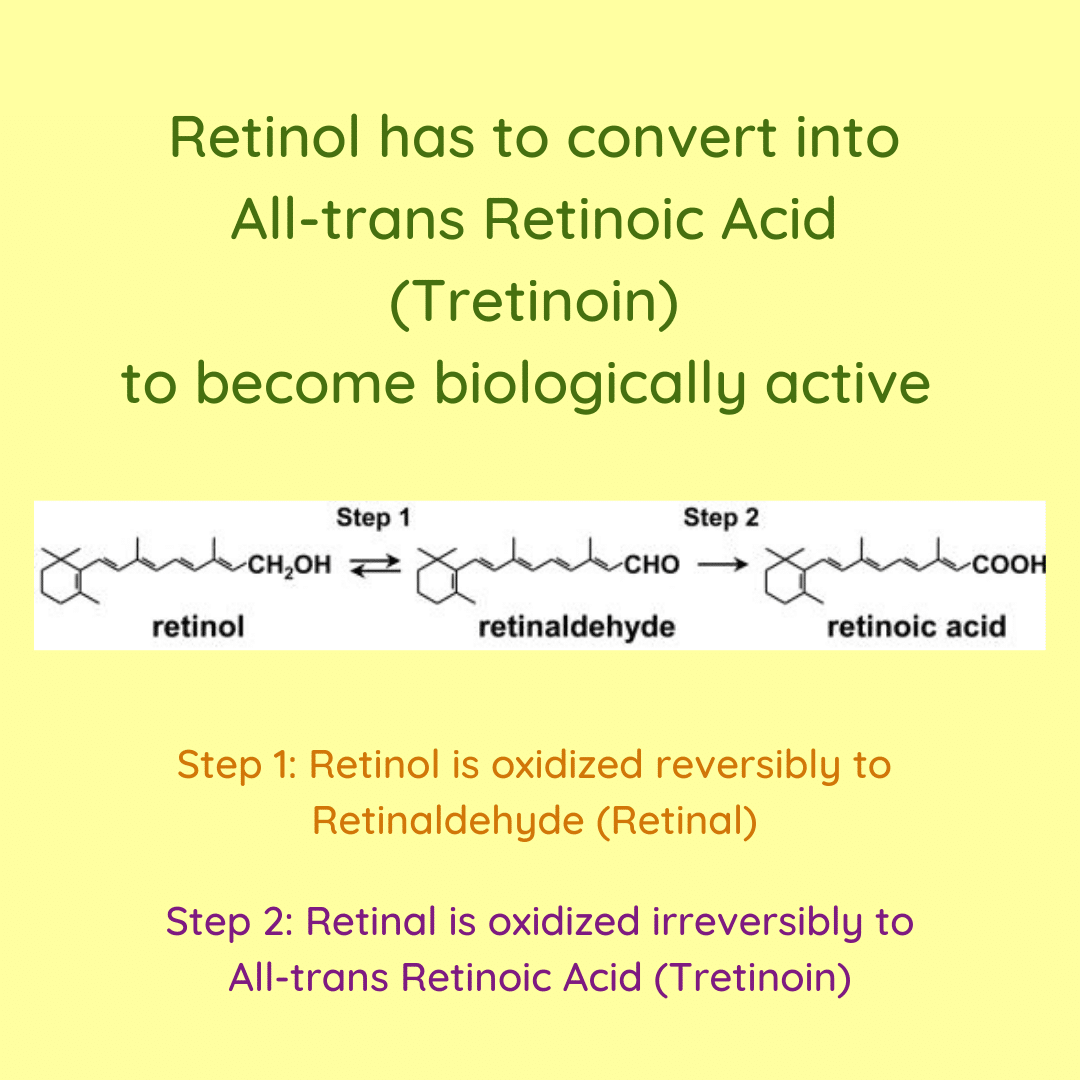
All that must occur in your skin before retinol can do anything for it.
Retinal converts into retinoic acid in one step (not two); it is slightly more potent than retinol.
However, retinoic acid works right away after its application. You can achieve similar effects on your skin with the consistent, topical use of retinol and retinoic acid. Only it’ll take quite longer to get the same visible results with retinol.
How do retinoids benefit your skin, especially in the brighter months?
Most people can tolerate and benefit from topical retinoids, even people with sensitive skin or, for instance, rosacea. It’s all a matter of knowing how to incorporate them into your routine.
If you apply quality retinoids consistently and appropriately to your skin, they’ll prevent and treat cutaneous photodamage. That’s why their use is relevant all year long, even more when the sunlight is more intense.
Retinoids won’t make your skin more sensitive to the sun or more prone to burn. They don’t decrease the Minimal Erythema Dose (or MED, the amount of ultraviolet radiation required to make your skin red).
However, you should always practice the number one rule for great skin, which is sun protection! If you leave your skin unprotected, ultraviolet light will ruin it during the day (then it won’t matter what you apply at night).
How do retinoids work to prevent & correct photodamage?
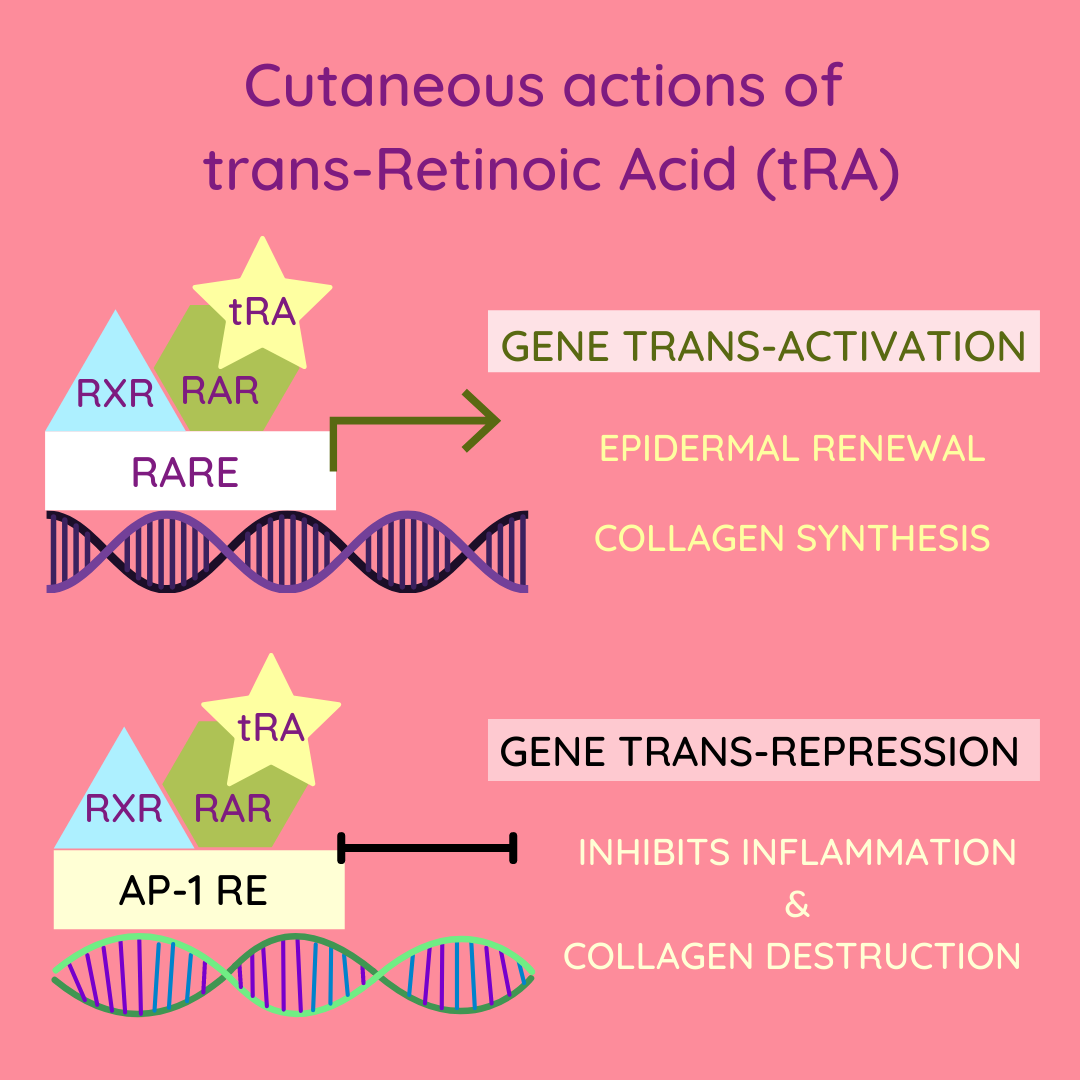
Retinoic acid (and its synthetic analogs) bind specific receptors, called retinoid receptors.
Once that happens, those complexes of retinoic acid and retinoid receptors bind concrete gene sequences.
And that results in the regulation of the expression of those genes. That is the activation or inhibition of the synthesis of the proteins encoded by them.
Retinoids increase cell renewal in the epidermis and collagen in the dermis
When retinoic acid binds sets of genes with sequences known as RAREs (Retinoic Acid Response Elements), it activates the synthesis of the proteins encoded by those genes.
Through that mechanism, retinoic acid promotes the expression of proteins involved in the growth and differentiation of the cells that comprise the epidermis (called keratinocytes).
There are several layers of keratinocytes in the epidermis (see the image below).
In the bottom layers are the most proliferative keratinocytes (which grow). Some of those eventually cease to grow so fas and begin the process of differentiation. Differentiating keratinocytes migrate up and progressively become part of the distinct upper (less proliferative) epidermal layers.
At the uppermost skin layers, differentiating keratinocytes die.
And give rise to what we know as the stratum corneum or protective barrier (which is the most external cutaneous layer, made up of dead keratinocytes and lipids that slough off continuously).
Vitamin A (among other molecules) tightly regulates the whole process of epidermal proliferation and differentiation.
The image below shows what happens in our skin upon treatment with all-trans retinoic acid (the biologically active form of vitamin A). It stimulates keratinocyte proliferation in the basal layer. And a very tidy process of differentiation.
All that results in increased epidermal thickness and a more organized epidermis (that looks better from the outside!).
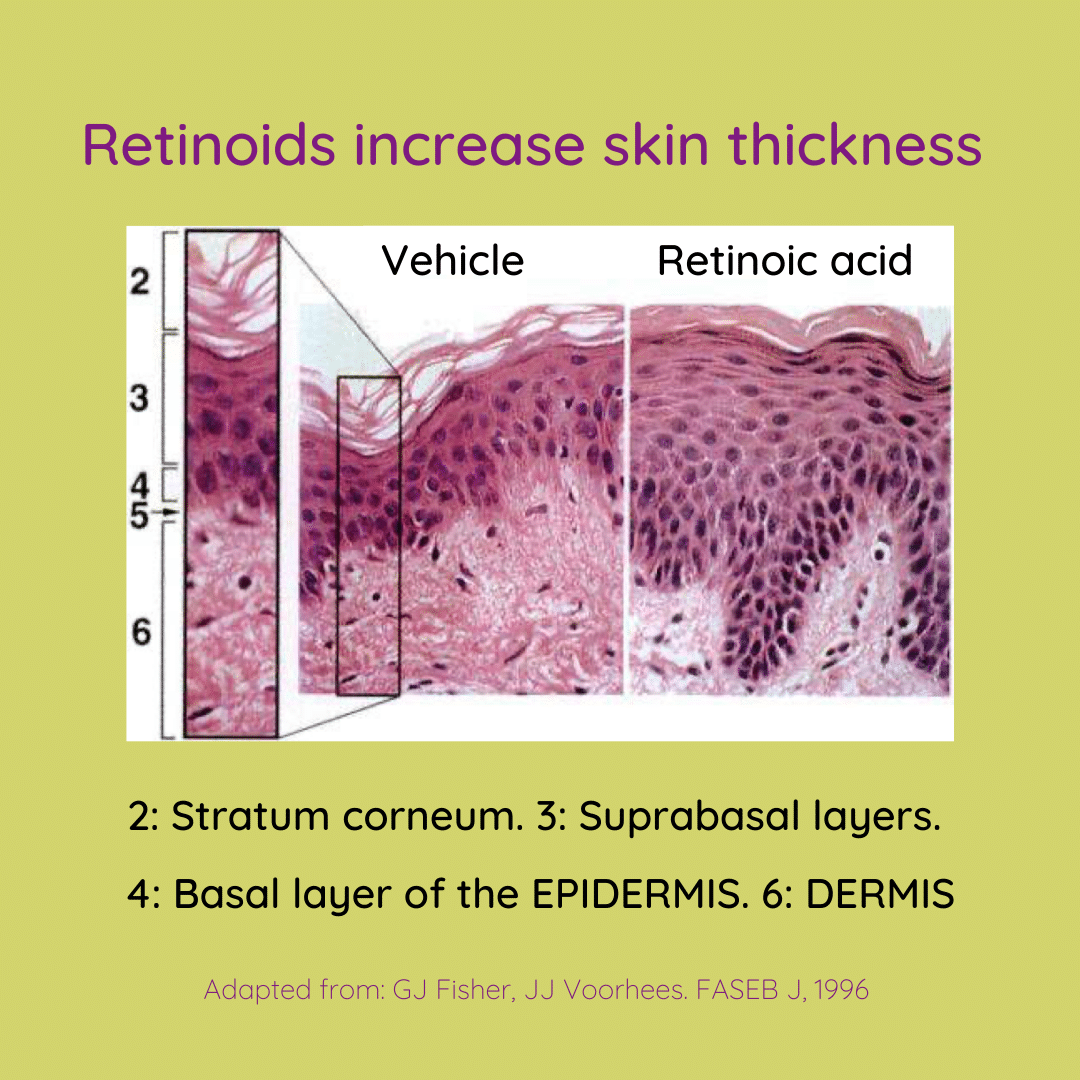
As you can see in the image, even the stratum corneum (the most external skin layer, depicted with number 2) gets more dense and compact.
Retinoids also have a positive impact on the dermis due to the ability of retinoic acid to enhance collagen production (and dermal thickness).
Retinoids inhibit non-beneficial stress and inflammatory responses
On the other hand, through the binding of response elements other than RAREs in different genes, retinoic acid represses their expression.
Throughout that mechanism, retinoids impede the expression of proteins that bring about photoaging (aging of the skin caused by sunlight) and pre-cancerous features.
Often, those proteins are mediators of inflammation. And the repression of those by retinoic acid avoids harmful inflammatory states and stimulates the well-functioning of the cutaneous immune system.
In the epidermis, that evades the over-activation of keratinocytes and melanocytes (the cells that produce melanin).
And, therefore, reduces skin cancers and melanin production disorders (which cause skin discolorations, such as dark spots).
Indeed topical retinoids reduce the incidence of actinic keratosis, which are pre-cancerous lesions that, if left alone, can eventually become non-melanoma skin cancers (specifically, squamous cell carcinomas).
And in the dermis, that inhibits the activation of matrix metalloproteinases upon sun exposure.
Matrix metalloproteinases are enzymes that get swiftly activated upon exposure to sunlight and break collagen and other extracellular matrix components in the dermis, causing wrinkles, photoaging, and a worse skin barrier.
Those are some of the various ways through which retinoids limit cutaneous sun damage. Now you know why retinoids are such a gem to dermatologists.
When do you need to think twice before using topical retinoids in the summer?
You might want to reconsider topical retinoids right now (in the summer) if you’ve never used retinoids before.
Why? Because when you start a topical retinoid (including retinol) you’ll experience accelerated skin desquamation (that’s expected). Remember that retinoids increase epidermal renewal.
Thus, until the skin gets used to retinol or other retinoids, you might notice some extra peeling.
That might temporarily correlate with a mildly compromised skin barrier that needs extra care (in the form of added moisturization and sunscreen). And it may be not easy to manage if you’ve never experienced it.
If you’d like to start a retinoid treatment now anyways (and not wait until October or November), stay tuned! In my next blog I’ll tell you how to introduce a retinoid into your skincare routine safely and effectively (along with some skincare product recommendations for that).
Please leave your thoughts in the comments section below.
Take care and see you soon!
María
4 Comments